The Church’s teaching on human dignity did not end with Vatican II. It continues to be reaffirmed by the Church’s shepherds today.
For Christians, the moral framework by which we evaluate public life does not come from political parties, ideologies, or cultural movements. It comes from the Gospel of Jesus Christ.
The Lenten season offers the faithful far more than a chance to give up chocolate, social media, or other temporary comforts.
The life and witness of St. Valentine, though historically sparse, speak powerfully to the universal call to discipleship entrusted to every baptized Christian. Beneath the legends and cultural associations that surround his name lies a profound Gospel truth: authentic love is never sentimental alone – it is sacrificial, courageous, and rooted in fidelity to Christ.
As a new year begins, I find myself reflecting – perhaps more than I’d like – on the state of political discourse in our country.
Not long ago, someone asked me to explain the three theological virtues: faith, hope, and love. I paused, realizing how inseparable they are – three strands of one divine thread woven together by God.
As November arrives, the Church invites us into a season of reflection.
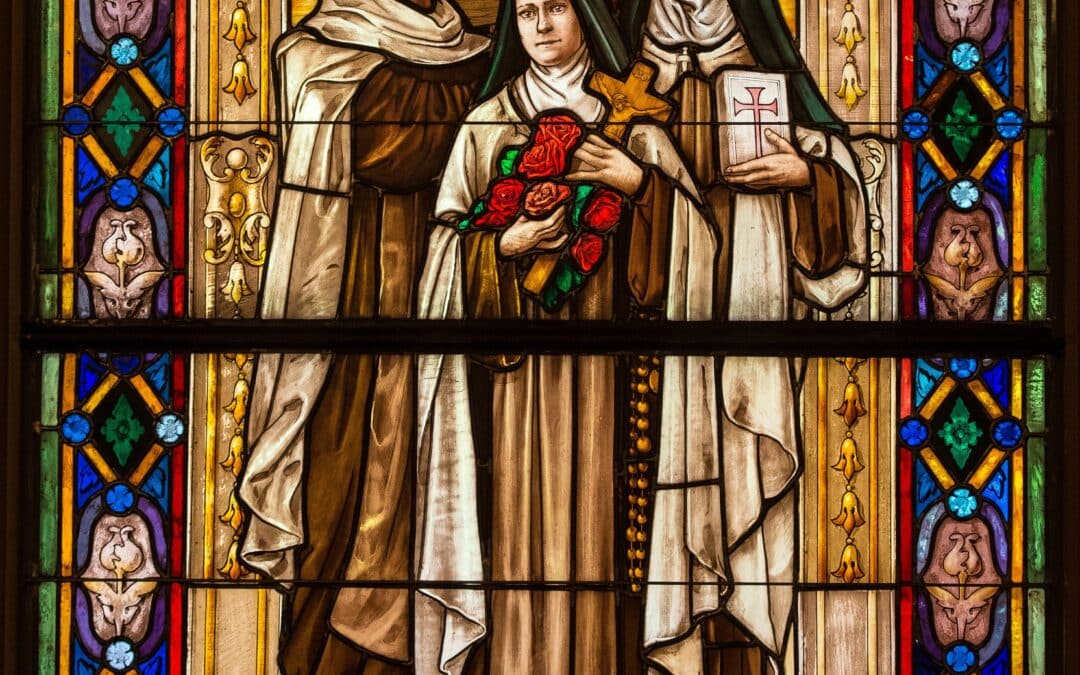
A stained glass window inside St. Thérèse Chapel at Holy Hill in Hubertus, Wis., depicts St. Thérèse with fellow Carmelite saints, John of the Cross and Teresa of Ávila. All three are Doctors of the Church. OSV NEWS PHOTO/SAM LUCERO
As Labor Day passes and the rhythms of fall begin, we are offered a chance not just to return to work and routine, but to reflect more deeply on the meaning of labor and the dignity of the worker – especially through the lens of our Catholic faith.
In today’s polarized world, few topics stir more passionate debate than immigration. The United States faces complex challenges at the border, in our laws, and in our communities. Emotions run high: fear, frustration, compassion, and concern are all part of the conversation. As Catholics, we are not called to avoid these difficult issues.